Cold conditions don’t forgive. This belt does.
If you’ve ever tried to keep a quarry or grain terminal moving at -30°C, you know the score: covers crack, splices stiffen, and idlers chatter. That’s why the
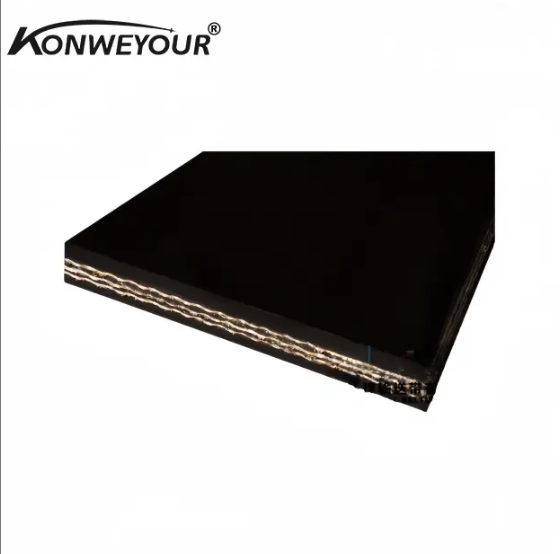
Cold Resistant NN Rubber Conveyor Belt has been showing up in procurement lists from Inner Mongolia to Northern Europe. It’s a textile belt designed to stay flexible and grippy when the mercury sinks, and—this is important—without feeling like a science project in the field.
Origin: No. 13 Gongqiang Road, Nangong Economic Development Zone, Xingtai City, Hebei Province. Real factory Adresas, real people answering the telefonasefonas. Many customers say the team will actuVisiy talk through pulley diameters and troughing angles instead of just El. paštasing a PDF. Nice change.
What’s happening in the market
Industry trend-wise, cold-resistant textile belts are replacing older general-purpose covers in ports, coal prep plants, and fertilizer lines that run through winter. Energy operators are asking for lower-temperature ratings (down to ≈-45°C, sometimes -60°C with specialty compounds) and better abrasion figures. Sustainability matters too—longer life means fewer changeouts, fewer stoppages.
Technical core (quick but useful)
- Carcass: NN fabric (Nylon/Nylon) for high impact, low elongation under load.
- Cover compound: NR/BR blend tuned for low glass-transition; plasticizer package for cold flex; anti-crack additives.
- Temp window: ≈ -40°C to +80°C in typical spec (real-world use may vary).
- Standards referenced: ISO 14890 (textile belts), ISO 4649 (abrasion), ISO 812 / ASTM D1329 (low-temp), ISO 283 (tensile/adhesion).
Typical specification snapshot
| Item |
Value (≈, lab-tested) |
|---|
| Carcass |
NN200 / NN250 / NN300 (2–5 ply options) |
| Cover grade |
Cold-resistant, abrasion ≤ 200 mm³ (ISO 4649) |
| Min. working temp |
-40°C (option -50°C with special compound) |
| Tensile strength cover |
≥ 18 MPa (ISO 37) |
| Adhesion (plies) |
≥ 5 N/mm (ISO 283) |
| Service life |
≈ 3–7 years depending on load, pulley size, maintenance |
Process flow (how it’s built)
- Compound mixing: low-Tg NR/BR + plasticizers + anti-ozonants.
- Calendering: NN fabrics skim-coated for inter-ply bonding.
- Building: Ply-up with specified cover gauges (e.g., 6+2, 8+3 mm).
- Vulcanization: controlled cure to lock flexibility in cold.
- Testing: abrasion (ISO 4649), tensile/adhesion (ISO 283), low-temp flex/brittleness (ISO 812), visual QA.
Where it’s used
Mining loadouts, aggregates, grain elevators, wood chips, fertilizers, and—surprisingly—municipal waste transfer belts that run outdoors. One customer in Karelia told me their Cold Resistant NN Rubber Conveyor Belt kept tracking true through a February snap; another from Alberta said splicing was “less twitchy” in the cold than expected.
Vendor snapshot (real-world considerations)
| Vendor |
Min Temp |
Lead Time |
Certs |
Notes |
|---|
| JT Conveyor (this model) |
≈ -40°C (option -50°C) |
2–4 weeks common sizes |
ISO 9001; ISO 14890 conformity |
Strong NN range, practical support |
| Regional Brand A |
≈ -30°C |
3–6 weeks |
Factory QA only |
Budget-friendly, lighter covers |
| Global Brand B |
≈ -45°C |
6–10 weeks |
ISO/CE, extended reports |
Premium pricing, broad dealer network |
Customization and support
Widths up to ~2200 mm, cover gauges tailored, ripple or chevron profiles on request, hot or cold splicing kits, and troughing compatibility checks. For coastal ports, pairing cold- and oil-resistant covers is doable. To be honest, dalintis your pulley diameters early—minimums matter for cold work.
Mini Byla notes
- Nordic quarry, 500 t/h granite: Cold Resistant NN Rubber Conveyor Belt (NN250, 6+2) cut unplanned downtime by ≈22% winter-to-winter; abrasion after 9 months still within ISO 4649 target.
- Grain terminal, -35°C events: swapped GP belt for Cold Resistant NN Rubber Conveyor Belt, splice flex tests at -30°C passed 1,000 cycles without surface checking.
Final take
If your line creaks when the air stings your face, this belt is worth a look. It’s not magic—maintenance and alignment still rule—but the compound and NN carcass combo hold up when winter tries to break things.
Citations
- ISO 14890: Conveyor belts — Specification for rubber- or plastics-covered textile conveyor belts.
- ISO 4649: Rubber, vulcanized — Determination of abrasion resistance.
- ISO 812: Rubber, vulcanized — Determination of low-temperature brittleness.
- ASTM D1329: Standard Test Method for Rubber—Retraction at Lower Temperatures (TR Test).
- ISO 283: Textile conveyor belts — Full-thickness tensile strength, elongation and adhesion tests.
- CEMA: Belt Conveyors for Bulk Materials, 7th Ed.
- DIN 22102: Conveyor belts with textile plies for bulk goods.